Master Japanese with
Tomodai Journal
Structured JLPT roadmaps, nuanced grammar breakdowns, kanji retention secrets, and immersive conversation tips from native educators.
Trending Insights & Popular Picks
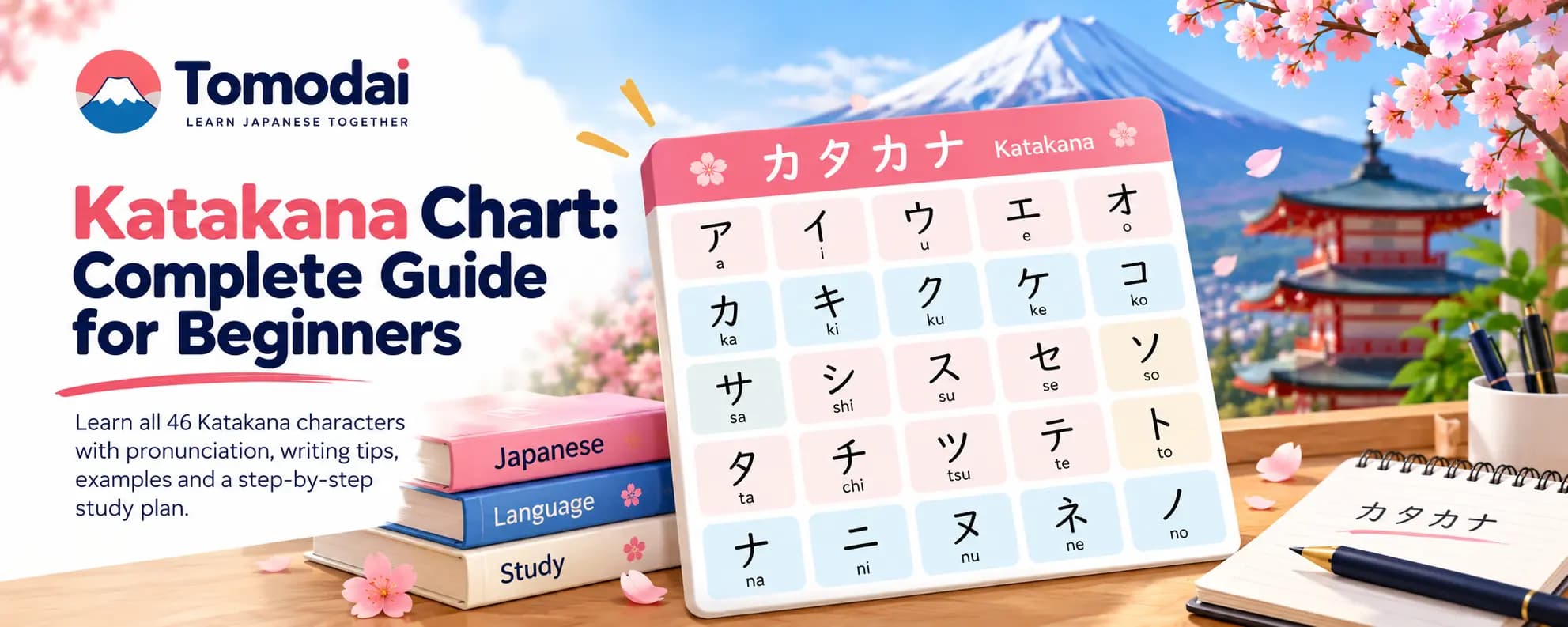
Katakana Chart: Complete Guide for Beginners
A Katakana chart is a reference table showing the 46 basic Katakana characters used in Japanese. It helps learners understand each character's sound and pronunciation. Katakana is commonly used for foreign-origin words, foreign names, some technical terms, onomatopoeia, and visual emphasis. Learning the chart makes it easier to read everyday Japanese.
 Emma Collins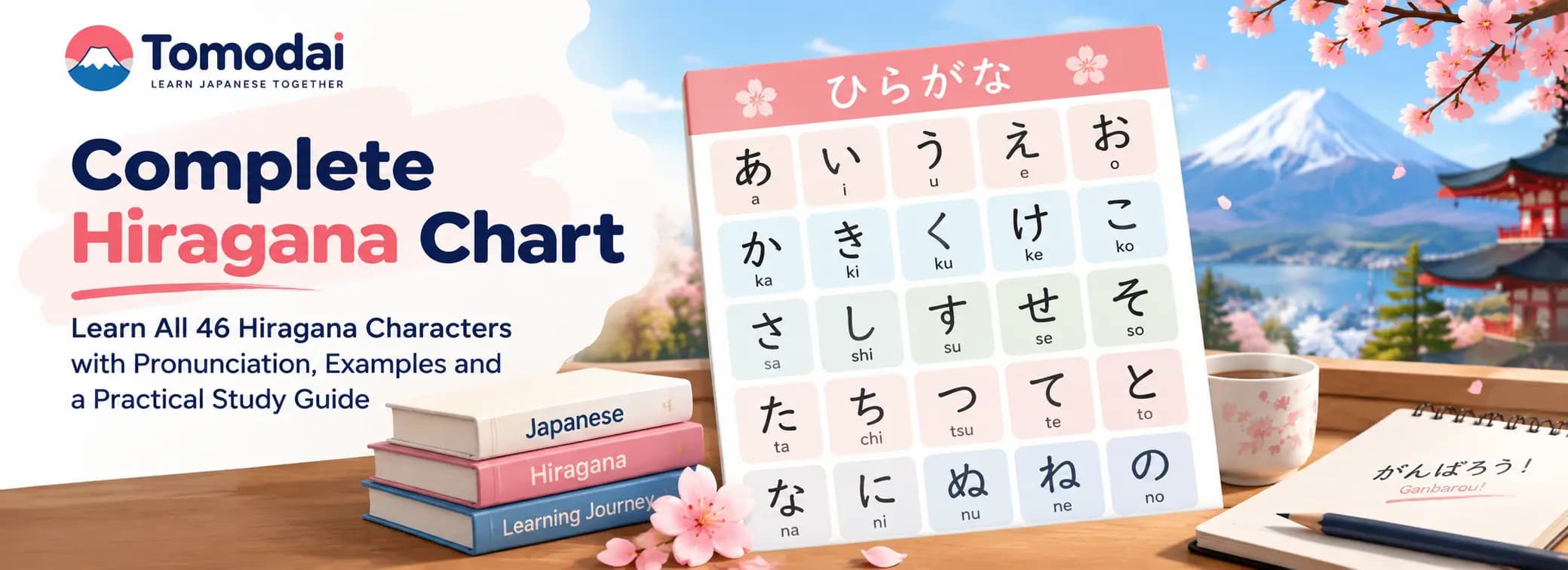
Hiragana Chart: Complete Guide with Pronunciation
Hiragana is one of the main Japanese writing systems and contains 46 basic characters. Each character represents a Japanese sound, such as あ (a), か (ka), and し (shi). Learning the Hiragana chart helps beginners read Japanese words, grammar endings, particles, and simple sentences without depending on Romaji.
Emma Collins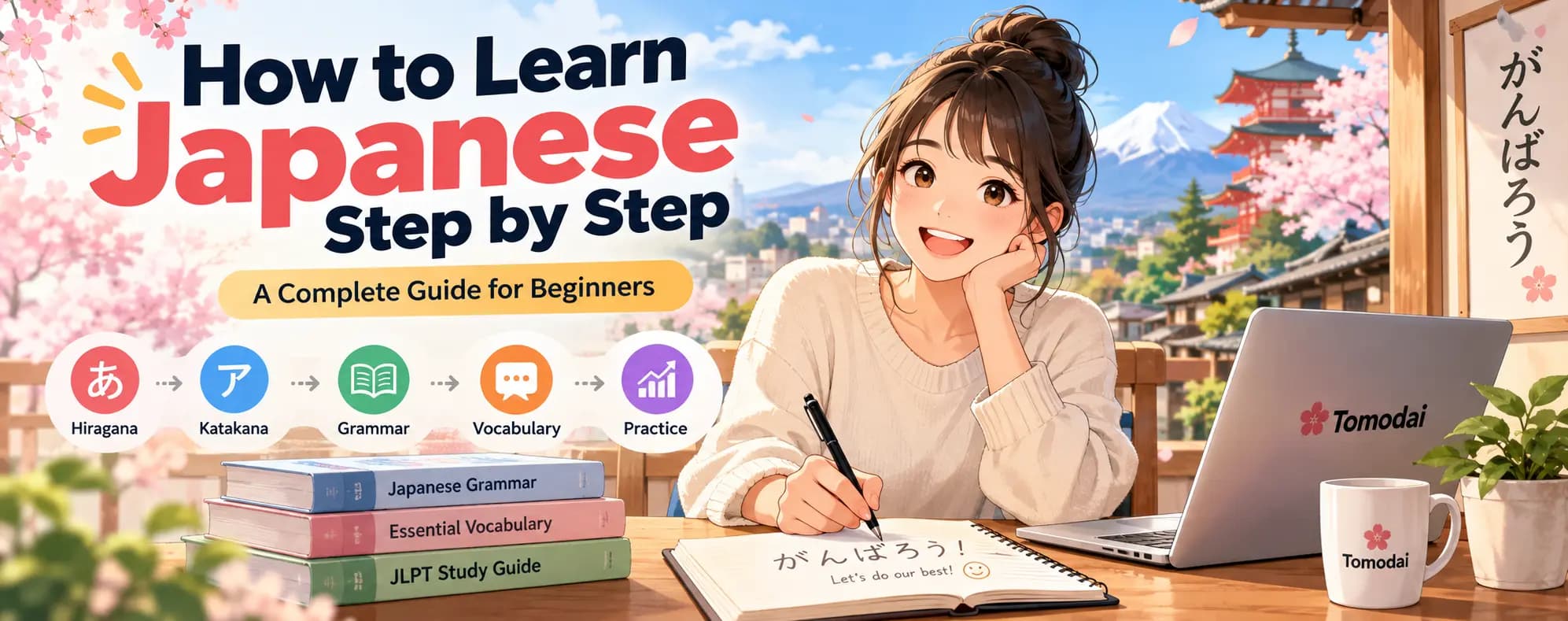
How to Learn Japanese: The Complete Beginner's Guide (2026)
The best way to learn Japanese is to build your skills in a clear sequence: start with Hiragana and Katakana, learn basic vocabulary and grammar, introduce Kanji gradually, and practice listening and speaking from day one. Study consistently every day, apply the language in real-world contexts, and review older material regularly.
Emma CollinsAll Published Study Guides
Showing 4 guides
Katakana Chart: Complete Guide for Beginners
A Katakana chart is a reference table showing the 46 basic Katakana characters used in Japanese. It helps learners understand each character's sound and pronunciation. Katakana is commonly used for foreign-origin words, foreign names, some technical terms, onomatopoeia, and visual emphasis. Learning the chart makes it easier to read everyday Japanese.
 Emma Collins
Hiragana Chart: Complete Guide with Pronunciation
Hiragana is one of the main Japanese writing systems and contains 46 basic characters. Each character represents a Japanese sound, such as あ (a), か (ka), and し (shi). Learning the Hiragana chart helps beginners read Japanese words, grammar endings, particles, and simple sentences without depending on Romaji.
Emma CollinsHow to Learn Japanese: The Complete Beginner's Guide (2026)
The best way to learn Japanese is to build your skills in a clear sequence: start with Hiragana and Katakana, learn basic vocabulary and grammar, introduce Kanji gradually, and practice listening and speaking from day one. Study consistently every day, apply the language in real-world contexts, and review older material regularly.
Emma Collins
brings you one step closer to achieving your Japanese learning goal
Learning Japanese is not about mastering everything at once. Real progress comes from taking small, consistent steps toward clear Japanese learning goals. Whether you study for 10 minutes or an hour, regular practice helps you build vocabulary, grammar, speaking, reading, and listening skills over time. Set realistic goals, track what you can actually do, and focus on progress rather than comparing yourself with others. Your goals may change as you improve, and that is completely normal. Every lesson, practice session, and new word brings you one step closer to becoming confident in Japanese.
Emma Collins